What is Life Coaching?
Most people come to counseling hoping to feel better. But feeling better and actually moving forward are two different things.
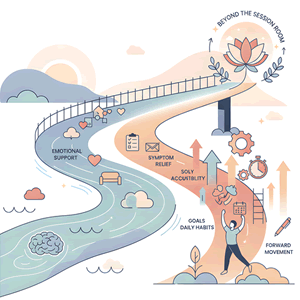
Life Coaching-Integrated Mental Health Counseling bridges that gap by combining the emotional depth of clinical therapy with the practical momentum of life coaching.
Rather than focusing solely on symptom relief, this approach also addresses goals, daily habits, accountability, and forward movement—giving clients both the emotional support they need and the actionable structure to grow beyond the session room.
Coaching-style methods are woven into counseling to enhance treatment, not replace it.
Key Benefits for Clients
Clients who experience this integrated approach often notice something different early on: sessions don’t just feel good—they lead somewhere. Progress becomes more tangible when insights are tied to concrete steps.
Rather than leaving a session with a sense of clarity that fades by midweek, clients walk away with a clear direction and tools to act on it. Accountability follow-ups keep that momentum alive between sessions, reducing the gap between understanding a problem and actually doing something about it.
Over time, this creates a compounding effect—each week builds on the last, and behavioral change starts to feel less like effort and more like habit.
-
Core Coaching Skills Used in Counseling
The coaching techniques woven into this counseling approach are chosen carefully and deliberately, selected for their ability to complement and support clinical work without overstepping its boundaries.
Each technique is thoughtfully integrated to ensure it enhances the therapeutic process, helping clients move forward in a way that feels both structured and deeply personal.
-
Active Listening and Reflective Responding
When clients feel genuinely heard rather than assessed or judged, something important shifts. A sense of safety begins to develop—one that allows clients to speak more openly, explore difficult emotions, and engage more honestly with the therapeutic process.
It is this foundation of trust that makes sessions not only more comfortable, but more productive and meaningful over time.
-
Strength-Based Feedback
Rather than focusing only on what’s going wrong, the counselor helps clients recognize what they’re already doing well — whether that’s a moment of resilience, a healthy coping strategy, or simply the courage to show up.
By highlighting these existing strengths, the counselor reinforces a client’s sense of self-efficacy, helping them see themselves not as broken, but as capable. Over time, this builds the confidence that real, lasting change is well within their reach.
-
Motivational Questioning
Thoughtful, open-ended questions gently guide clients to explore their values, clarify what truly matters to them, and uncover their own reasons for moving forward. Rather than being told what to do, clients are invited to reflect and arrive at their own insights — making those insights far more meaningful and lasting.
This approach is particularly powerful for clients who feel stuck or uncertain, helping them reconnect with their inner sense of direction rather than relying on external guidance.
-
Realistic Goal-Setting Tied to Daily Behavior
Goals aren’t abstract aspirations here. They are specific, achievable, and deeply grounded in the rhythms of everyday life — think daily habits, weekly routines, and small but meaningful steps that build momentum over time.
Because these goals are tied to real, lived experience rather than lofty ideals, they feel more manageable and are far more likely to stick in the long run.

How Boundaries and Accountability Work
A common concern with blending coaching and counseling is that the clinical integrity of therapy could be diluted. This approach takes that boundary seriously.
Deep trauma processing, diagnosis, crisis intervention, and risk management remain firmly within the scope of mental health treatment. Coaching-style methods are reserved for present-day growth: building routines, managing life transitions, improving personal boundaries, and staying engaged in treatment.
Accountability is built into the process naturally. At the close of a session, clients leave with a clear intention—not a vague sense of what they discussed.
A follow-up check-in at the next session ensures that what was planned actually happened, and if it didn’t, that becomes valuable clinical material in itself.
Real-World Application
A client managing chronic stress and low motivation arrives at a session feeling overwhelmed and unsure where to begin. Rather than spending the full hour processing those feelings alone, the counselor helps the client identify one clear priority for the week ahead.
Together, they develop a simple weekly plan: one coping strategy to practice, one small behavioral target, and a specific check-in question to reflect on before the next session.
That combination—emotional support paired with concrete direction—shifts the experience of counseling from something that happens in a room once a week to something that continues unfolding in daily life. The client leaves not just relieved, but equipped.
Why This Approach Works Best
Insight alone rarely creates change. Many people who seek counseling already have a clear understanding of their struggles—they know what’s holding them back, they can name their patterns, and they’ve thought deeply about their lives. What they often lack is the structure and accountability to act on what they know.
Life Coaching-Integrated Mental Health Counseling works because it respects both realities. The clinical foundation ensures that emotional safety, proper diagnosis, and evidence-based treatment are never compromised.
The coaching layer ensures that sessions generate forward movement, not just reflection. Together, they create a counseling experience that is both deeply supportive and practically empowering—one that meets clients where they are and steadily helps them get to where they want to be.
| Topic | Explanation | Core Elements |
|---|---|---|
| What is Life Coaching-Integrated Mental Health Counseling? |
This approach combines clinical therapy’s emotional depth with the practical momentum of life coaching. It bridges the gap between feeling better and actual forward movement by addressing goals, habits, accountability, and progress while providing emotional support and actionable structure. |
Emotionally supportive, goal-focused, blends counseling and coaching. |
| Key Benefits for Clients |
Clients experience tangible progress as sessions tie insights to actions. Momentum is maintained through accountability follow-ups, leading to consistent behavioral change that feels natural over time. |
Clarity, direction, accountability, and lasting habits. |
| Core Coaching Skills Used in Counseling |
Carefully selected coaching techniques enhance the counseling process. These include active listening, strength-based feedback, motivational questioning, and realistic goal-setting tied to daily behavior for meaningful change. |
Active listening, strength reinforcement, goal-setting, questioning to encourage progress. |
| How Boundaries and Accountability Work |
Clinical integrity is prioritized by reserving trauma processing, diagnosis, and crisis intervention solely for therapy. Coaching methods focus on growth and are supported by clear session intentions and follow-up check-ins to ensure accountability. |
Defined boundaries, therapeutic focus, clear goals, follow-ups. |
| Real-World Application |
Clients are guided to identify priorities and create achievable weekly plans that integrate emotional support with actionable steps. The approach ensures that counseling benefits extend beyond sessions into daily life. |
Practical plans, emotional depth, continued growth beyond sessions. |
| Why This Approach Works Best |
This integrated method works by combining emotional safety and evidence-based treatments with coaching’s structure and momentum. It allows clients to move forward effectively while maintaining support for emotional challenges. |
Supportive, structured, empowering, goal-oriented. |


view some of recent postings